
About Dominika
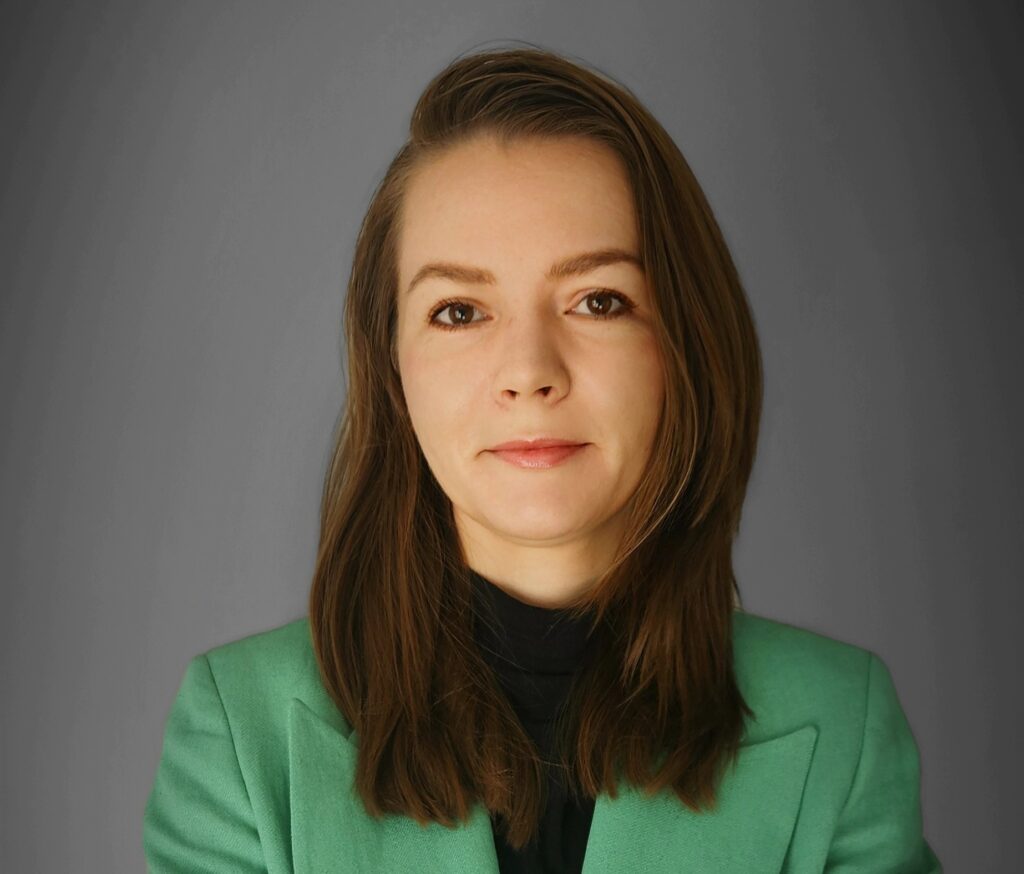
Dominika, originally from Poland, is a researcher at the Institute of Geophysics, Polish Academy of Sciences in Warsaw, where she also completed her PhD. During her doctoral studies, she had the exciting opportunity to spend several months at the University of Minnesota in the USA, enriching her academic experience. Most recently, she finished a postdoctoral fellowship at Uppsala University in Sweden, where she conducted innovative research on fresh sediments from the Baltic Sea.
Dominika enjoys collaborating with colleagues worldwide and values attending conferences to meet new people and explore emerging topics. She also engages in fieldwork, appreciating its hands-on approach to her research.
Dominika’s Involvement in IAGA: How It Happened
During her PhD, Dominika was eager to connect with an international group of scientists in her field but was uncertain about how to find such opportunities. Initially, she believed that joining IAGA required extensive experience. However, her perspective changed when she received an invitation that made her realize that everyone, especially Early Career Scientists (ECS), is welcome.
Dominika met Eduard Petrovsky at the Castle Meeting conference in Belgium, where they established their initial contact. Over the years, they kept in touch, and after a few years, Eduard invited her to serve as an ECS representative for IAGA.
Dominika’s Research
Her research focuses on Earth’s magnetism, with particular emphasis on rock, paleomagnetic, and environmental magnetism. Adopting an interdisciplinary approach, she combines geology and geophysics to investigate the geological processes that shape sedimentary and mafic rocks. Her research interests are diverse and far-reaching.
During her PhD, she explored the rock-magnetic properties of gas-bearing Silurian shales from Poland. Later, as a postdoctoral researcher, she shifted her focus to studying fresh sediments from the Baltic Sea and aeolian deposits from the Channel area and northern China. This work aimed to address questions about climate change and the processes influencing geological records in modern environments.
Her current research involves studying the paleomagnetic record of mafic rocks from igneous provinces, large volcanic regions that predate 540 million years ago. This research seeks to deepen our understanding of magnetic field behavior during this fascinating period in geological history.
Step Into Engagement:
Dominika’s Advice for Getting Involved!
From Dominika’s experience, attending conferences and engaging with people fosters valuable connections that can drive positive change, making in-person interactions important for building professional relationships. She suggests that if you are unable to attend conferences, don’t hesitate to reach out to researchers via email. She highlights that researchers are mostly friendly and are often glad to respond to interested people.
For inspiration, check out our YouTube channel featuring other Early Career Scientists: https://www.youtube.com/@iaga-aiga.
Dominika’s contact
You can contact Dominika (in English or Polish): dominika.niezabitowska@gmail.com