
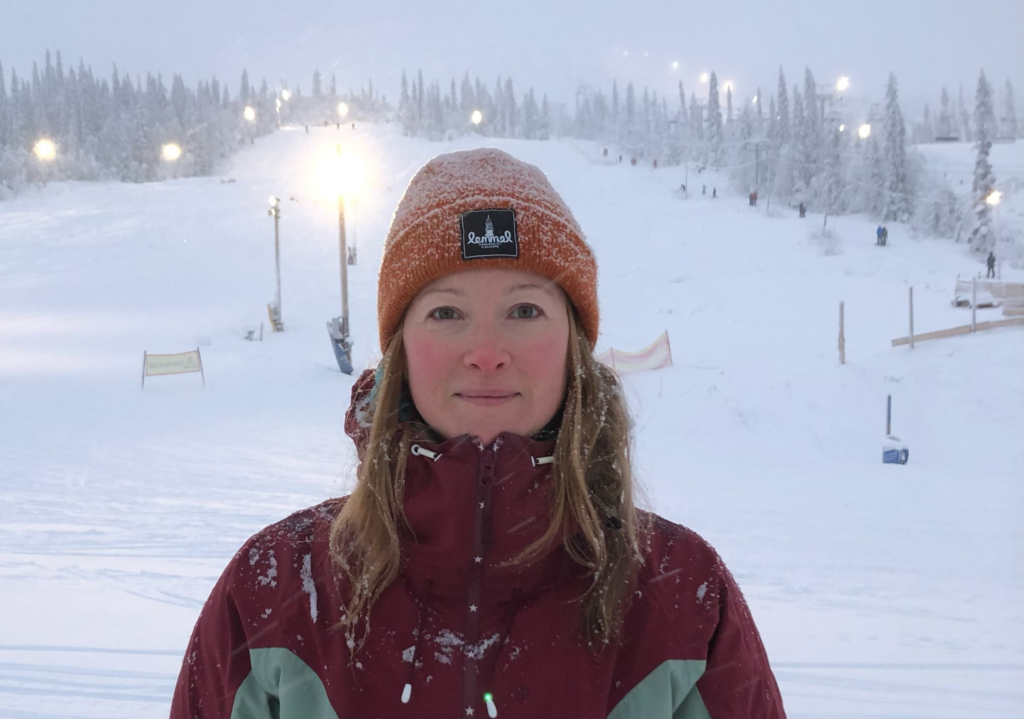

About Malin
Malin is an oceanographer who is originally from Sweden and works as a researcher at the Norwegian Research Centre (NORCE) in Norway in Earth System Modelling. She did her PhD at Stockholm University and Master and Bachelors both at University of Gothenburg (Sweden).
What she most enjoys in her work is trying to understand the complex system that is our climate, and making scientific exchanges and building relations with colleagues from all over the world. Being in an international working environment is great for her. She thinks that it helps to learn not only about her research topic but also the culture, language and other from different countries. Malin also enjoys helping students in their learning process.
Malin’s Involvement in IAPSO: How It Happened
Malin volunteered to help to organise the IAHS-IAPSO-IASPEI Joint Assembly in Gothenburg in 2013. She participated in the IAPSO-IAMAS-IAGA Joint Assembly in Cape Town in 2017 and, there, she was approached by her academic mentor, who was also on the IAPSO Executive Committee.
IAPSO had decided that they wanted to create an ECS group and they were looking for people to build it. Malin’s mentor encouraged her to apply and she was selected together with three other people. Together they started drafting what they wanted this network to become. The plan was to be a platform to join ECS, especially in physical and chemical oceanography.
There were 4 people drafting this network, but only 2 remained when the network started in 2018. At that time, other ECS had been recruited and today, the ECS committee consists of 10 members. If you want to be involved, Malin welcomes you to contact her!
Malin’s Research
Malin’s research focuses on the ocean’s critical role in the climate system through the use of climate models. She examines past, present, and future climates, investigating both physical and biogeochemical ocean processes.
One key area of her work involves understanding how changes in ocean circulation impact the ocean’s capacity to store carbon, which is vital for climate regulation. She aims to improve the representation of ocean processes in climate models. For past climates, Malin addresses the challenge of why climate models struggle to replicate the glacial drawdown of atmospheric CO₂. Approximately 100 ppm of CO₂ is known to have been absorbed by the ocean, yet models only account for just over half of this uptake. Her efforts contribute to refining ocean model processes for improved accuracy.
Looking to the future, she is particularly interested in how the melting of the Antarctic Ice Sheet, which introduces significant freshwater into the Southern Ocean, will influence ocean circulation, carbon dynamics, and consequently, climate change.
Step Into Engagement:
Malin’s Advice for Getting Involved!
Malin advises exploring ECS networks online to discover their activities and find ones that resonate with you. Many of these activities and meetings take place virtually, making them easily accessible. If you attend conferences, make sure to participate in ECS-related events to connect with others and integrate into the community. Conferences are excellent opportunities to see ongoing projects and meet those involved. If you come across an organization that interests you and where you’d like to contribute, reach out to them to inquire about potential volunteer opportunities.
Malin’s contact
You can contact Malin (in English, French, Swedish/Norwegian/Danish): info@iapsoecs.org