
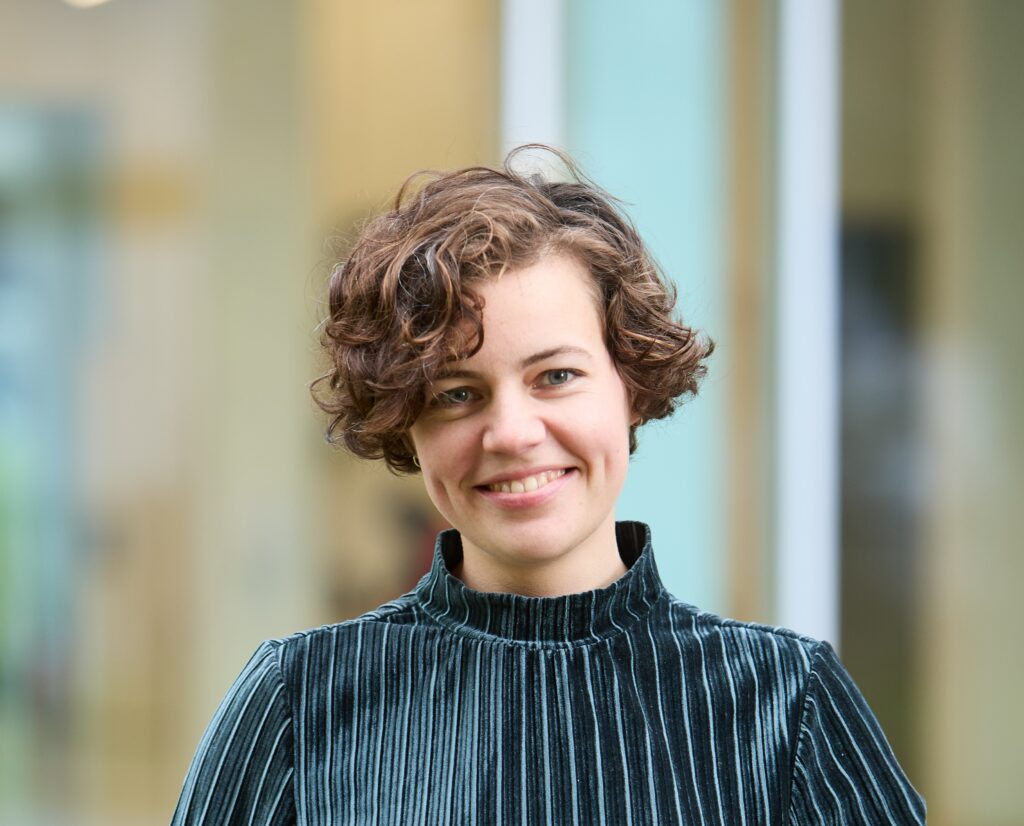

About Veronica
Veronica is originally from the Netherlands and is now working as postdoc at the Vrije Universiteit Brussel (VUB) in Belgium. She did her PhD at the Université libre de Bruxelles (ULB) after obtaining her Master’s and Bachelor’s in the Netherlands (TU Delft).
Veronica enjoys the variety of her work, with days in the office behind a computer, dynamic discussions with researchers across the world, and the icy winds in Antarctica while doing fieldwork. She is grateful to contribute to fundamental science involving very old ice to reconstruct the climate of the past, and meteorites that hold information on the formation and evolution of our Solar System.
Veronica’s Involvement in IACS: How It Happened
Veronica learned about IUGG and IACS during the International Summer School in Glaciology, organized by the University of Alaska Fairbanks. Later, she won an award from IACS after her PhD advisor nominated her and she participated actively in the 2023 IUGG conference in Berlin. She became officially involved as early-career representative of IACS through the overarching ECS network of IUGG.
Veronica’s Research
Veronica’s research focuses on blue ice areas in Antarctica. These areas make up only 1% of the total surface of the continent, but are of great scientific interest as they hold the potential to find the oldest ice on Earth, as well as exceptional concentrations of meteorites.
Blue ice areas are exposing ice which once formed through the accumulation and compression of snow. Normally, this ice is close to the bedrock, but in some areas ablative processes, such as wind, remove many overlaying snow and ice layers. In this process, meteorites that once became embedded in the ice become exposed at the surface. Complex flow patterns in these areas can trap million-year-old ice not far beneath the surface (tens to hundreds of meters). Through data-driven approaches, Veronica aims to identify the most promising sites to explore in the field. Moreover, these analyses help in understanding these areas from a climatological and glaciological perspective.
Step Into Engagement:
Veronica’s Advice for Getting Involved!
Veronica’s advice for getting involved as ECS is to participate in summer schools, attend conferences, and overcome the barrier to speak to people you do not know again and again. She specifically likes the mentoring programs that are often offered, which allow you to get in touch with people outside your institution and/or comfort zone.
It is free to become a member of IACS, and highly recommended if you are studying any aspect of the cryosphere. This membership makes you eligible for diverse grants and travel support as well as awards. You receive a newsletter 3 to 4 times a year, which highlights activities of the association.
Veronica’s contact
You can contact Veronica (in English, Dutch, French): veronica.tollenaar@vub.be