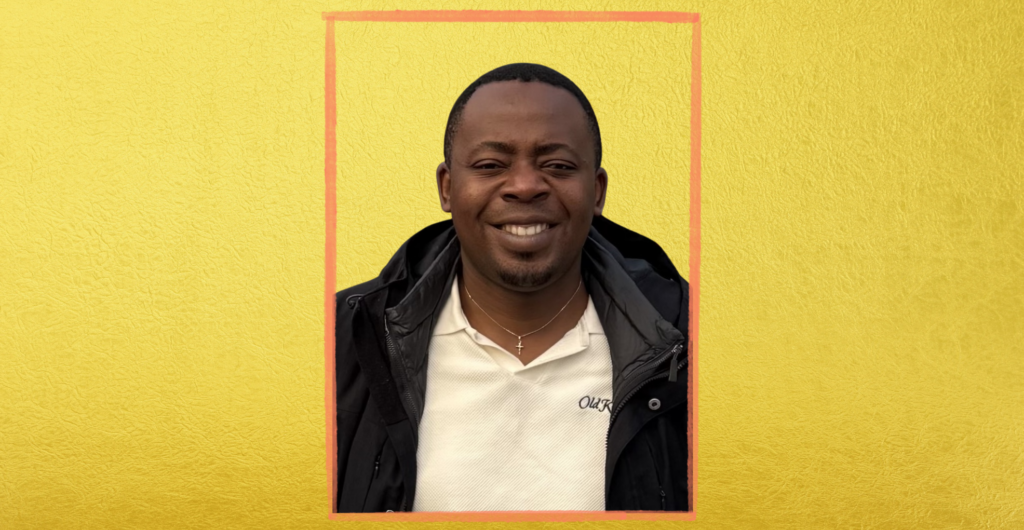
Franck Ghomsi is a postdoctoral fellow at the Centre for Earth Observation Science (CEOS) at the University of Manitoba in Canada, the Department of Oceanography at the University of Cape Town in South Africa, and the National Institute of Cartography in Cameroon. At the University of Cape Town, he is involved in research on Oxygen and Biogeochemical Dynamics along the West African Margin. His broader research focuses on sea-level variability, climate extremes, and ocean heat budgets along African coastal Large Marine Ecosystems and across Antarctica, using both in situ observations and satellite altimetry. His goal is to generate knowledge that supports adaptation strategies for coastal communities facing the combined effects of land subsidence, rising sea levels, and changing ocean conditions, particularly in the Global South, where vulnerability is high and observational data remain scarce.
Born and raised in Cameroon, Franck’s scientific journey is rooted in community, cultural knowledge, and a commitment to climate justice. He pursued degrees in Geophysics at the University of Yaoundé I and in Physical Oceanography at the University of Paul Sabatier in France and the University of Abomey-Calavi in Benin. He completed a dual PhD in both disciplines at the University of Yaoundé I and the University of Cape Town, supported by the Nansen Fellowship, the TUM.Africa Talent award, and collaborators at NERSC in Norway and DGFI-TUM in Germany.
Franck became involved in the IAG Early Career Scientists community through his commitment tobroadening representation and inclusivity in geodesy, with a particular focus on addressing challenges faced by ECS in Africa and other underrepresented regions.
Franck’s perspective on ECS challenges:
Franck believes that early-career scientists in Africa and across the Global South face distinct challenges that are often invisible to the wider community. Access to funding, instrumentation, and in situ data remains limited, and many ECS in these regions lack sustained mentorship or stable career pathways. At times, Franck has felt that contributions from Global South researchers are underestimated in international settings. He has sensed subtle skepticism at conferences, as if meaningful contributions were not expected from participants from underrepresented regions.
Despite these challenges, Franck remains optimistic. He is currently co-organizing the Geodesy for a Resilient Africa Summer School to strengthen African capacity in climate and ocean monitoring. Looking ahead, he envisions a geodetic and oceanographic community where diverse voices are visible, supported, and celebrated as the norm rather than the exception.