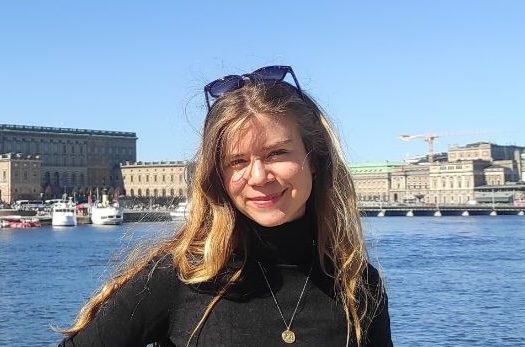
Interview with Marijn van der Meer.
1. Could you share a bit about yourself and your career?
I’m originally from Lausanne, Switzerland, and studied Data Science at the École Polytechnique Fédérale de Lausanne (EPFL), where I graduated in 2022. My passion for ice and snow began during my Master’s thesis, which I conducted in Delft, focusing on machine learning models for the mass balance of the Antarctic ice sheet.
For my PhD, I moved to Zürich to work on machine learning models of glacier mass balance. I began by developing a minimal machine learning model to estimate annual point surface mass balance at individual sites in the Swiss Alps using very small datasets (link). In 2023, I met Jordi Bolibar and Kamilla Hauknes Sjursen at a machine learning workshop in Finse, Norway, and we began developing the Mass Balance Machine, a global data-driven glacier mass balance model. I am now applying this model to glaciers in Switzerland.
2. What was the goal and results of your work in the project?
Glacier retreat presents major challenges for water resources, ecosystems, and sea-level rise, making it crucial to understand how climate affects glaciers. However, direct glacier measurements are sparse and unevenly distributed across the globe. We are developing a machine learning model (“The Mass Balance Machine”: https://github.com/ODINN-SciML/MassBalanceMachine) that can estimate annual and seasonal changes in glacier mass, even for glaciers and regions where no direct measurements exist. While my colleague, Kamilla Hauknes Sjursen, is studying the applicability of this model to Norwegian glaciers, my goal is to focus on the glaciers of the Central European Alps.
Please see more at: https://github.com/ODINN-SciML/MassBalanceMachine
3. Beyond your research, did the project bring other benefits to your career, such as networking, conferences, or new opportunities?
Yes, the project has brought significant benefits beyond my research. Its international scope has allowed me to collaborate with talented researchers from Norway, France, Belgium, and the Netherlands. I’ve also had the opportunity to present my work at various workshops and conferences across Europe, which has helped me expand my professional network and gain valuable feedback from the scientific community