
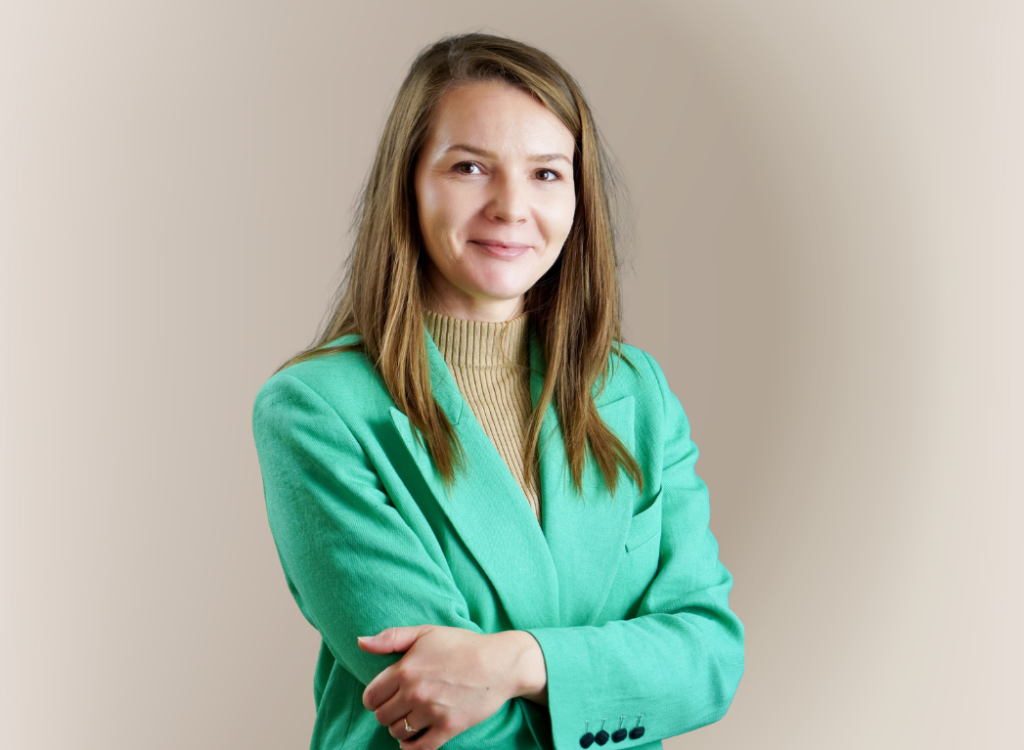
Dominika is from Poland, and she works at the Institute of Geophysics, Polish Academy of Sciences. Her primary research focus lies in the magnetic properties of rocks and sediments, which she uses as a tool to reconstruct past climates and environmental conditions. She is currently involved in three main research themes. The first investigates the reconstruction of Earth’s magnetic field prior to the Ediacaran, combining paleomagnetic analyses with isotope dating of rocks from Large Igneous Provinces. The second focuses on paleoclimate reconstruction and the identification of dominant dust-transport pathways in the English Channel and northwestern China. The third examines remanent magnetization acquisition in fresh marine sediments affected by diverse biogeochemical processes.
Dominika serves as the EC liaison within IAGA and has been a member of the IAGA Executive Committee since 2023, following her nomination at the IUGG General Assembly in Berlin. Since 2025, she has also represented IAGA on the IUGG ECS Committee, where she acts as Co-Chair, working to enhance communication, visibility, and the representation of early career scientists within the scientific community.
Dominika’s opinion on ECSs challenges
In her view, ECSs face numerous challenges, ranging from securing stable employment to obtaining competitive research funding. She finds the doctoral period is often highly stressful and, at times, frustrating; however, the postdoctoral stage can be even more demanding. After completing a PhD, researchers frequently need to relocate abroad to secure employment, if they are successful in highly competitive recruitment processes or in obtaining independent funding. This mobility requirement can significantly complicate starting and maintaining a family and may, at times, become an insurmountable obstacle. Short-term contracts further undermine stability, necessitating constant forward planning and uncertainty about the future, which over time may contribute to overwork and professional burnout. These examples illustrate how demanding a scientific career can be for ECS and highlight the often-overlooked personal and professional costs associated with working in academia.