“Success in a global field relies on the strength of your network. Never underestimate the power of a good mentor and the ability to adapt to new horizons.”
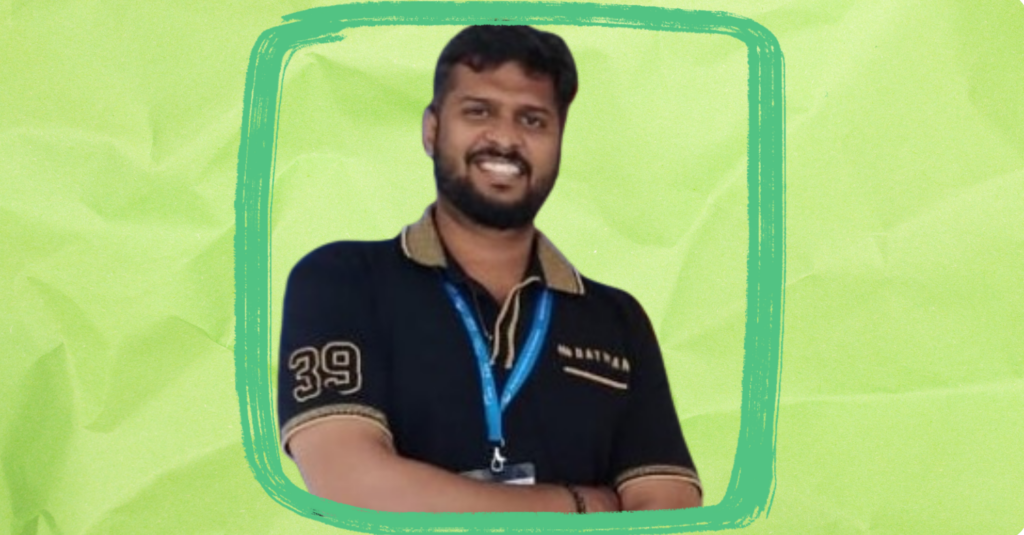
R. Arun Prasath is a geologist-turned-seismologist from India, currently working as a Scientist at the Institute of Seismological Research, Gandhinagar (Gujarat, India). His doctoral research focused on small-to-moderate Himalayan earthquakes, examining their source characteristics, stress conditions, spatio-temporal behaviour, and seismotectonic implications. At present, his research focuses on rupture dynamics, stress state, and source properties of intraplate seismicity in the Kachchh region of western India.
Arun has been part of the IASPEI Early Career Scientist (ECS) group since late 2023, contributing to coordination and community initiatives while engaging with emerging ideas and collaborations in seismology through the IASPEI-ECS network.
His academic journey began in Applied Geology during his bachelor’s and master’s studies. At that time, he shared that it was a difficult decision to step away from several PhD opportunities in other geological fields, such as hydrogeology and remote sensing. Eventually, however, he found his true interest in earthquake seismology. During his master’s program, he had even enrolled in a parallel part-time degree in mathematics, which he later discontinued to focus fully on his research path.
Although he had always been interested in pursuing research, Arun’s journey was not entirely straightforward. From an early age, he was fascinated by mathematics and science and deeply admired figures such as Srinivasa Ramanujan and Albert Einstein, whose work inspired his curiosity about the natural world. At the same time, he also wanted to pursue a career aligned with contributing to society, something he once associated with public service roles such as the Indian Administrative Service (IAS) or Indian Police Service (IPS). During this period, he briefly explored other opportunities, including a short stint in a BPO (Business Process Outsourcing) company that arose from a campus recruitment interview he attended casually. Interestingly, that brief experience also helped him improve his professional writing and communication skills in English. In retrospect, these motivations, together with his childhood fascination with natural disasters such as volcanoes and earthquakes, ultimately guided him towards a career in earthquake research.
Arun shares his thoughts on his career:
As part of my professional responsibilities, I am involved in monitoring seismic networks and supporting the generation, processing, and archival of seismic data. Being directly involved in data generation provides valuable insight into the data and greatly improves our ability to analyse and interpret seismic observations. Furthermore, exposure to multiple disciplines, such as geology, remote sensing, and mathematics, alongside seismology, provides broader perspectives and helps in understanding the many dimensions of earthquake research.
Arun’s opinion on ECS challenges:
I would like to discuss two important challenges faced by early career scientists, particularly those pursuing research in parts of the Global South.
- Lack of Exposure
Despite progressing reasonably well in my research career, I often felt the need for greater exposure to emerging skills, modern techniques, and research opportunities, including possibilities for collaboration. Coming from a middle-class background in India, access to such information and networks was often limited during the early stages of my career.
Even today, although social media and digital platforms provide access to enormous amounts of information, it is often difficult to identify and filter the most relevant opportunities among the vast and scattered sources available online. As a result, many early career researchers may miss important developments, training opportunities, or collaborative possibilities.
In today’s world of 24×7 internet access, cloud-based resources, AI tools, and rapidly growing open-source platforms, knowledge is widely accessible; however, identifying the right direction and reliable sources of information remains a challenge for many early career researchers.
In this context, I strongly believe that the IASPEI ECS group serves as an excellent platform for researchers like myself to gain exposure to relevant and emerging developments in seismology. It helps connect researchers, promotes healthy scientific discussions, and creates opportunities for collaboration and knowledge exchange among early career scientists worldwide.
- Scientific Validation
Another important challenge faced by early career researchers is scientific validation and guidance during the early stages of research. Many ECS researchers struggle with questions such as:
- Early assessment of their research ideas
- Understanding the limitations of specific techniques, datasets, or methodologies
- Identifying the most appropriate tools or approaches for a given scientific problem
These challenges can often be addressed through access to experienced researchers and active scientific communities. Platforms such as the IASPEI ECS group provide an important space where early career scientists can connect with experts, seek feedback, exchange ideas, and receive early guidance on their research approaches. Such interactions can lead to collaborations, constructive feedback, and valuable insights from senior scientists, which are essential for improving research quality and building scientific confidence.
Beyond these two aspects, early career scientists, particularly those in the Global South, often face additional challenges related to scientific visibility, cross-disciplinary collaboration, access to appropriate information, open datasets, and software tools.
The IASPEI ECS community provides an important platform to help address these challenges by promoting communication, collaboration, and access to shared scientific knowledge within the global seismological community.
As the global seismological community continues to grow, initiatives such as the IASPEI ECS group can play an important role in strengthening connections between early career scientists across different regions of the world. By sharing experiences, ideas, and knowledge, we can collectively support the next generation of researchers and build a more connected and inclusive scientific community.
The views expressed here are my personal perspectives as an early career scientist and do not necessarily represent the views of my institute.