
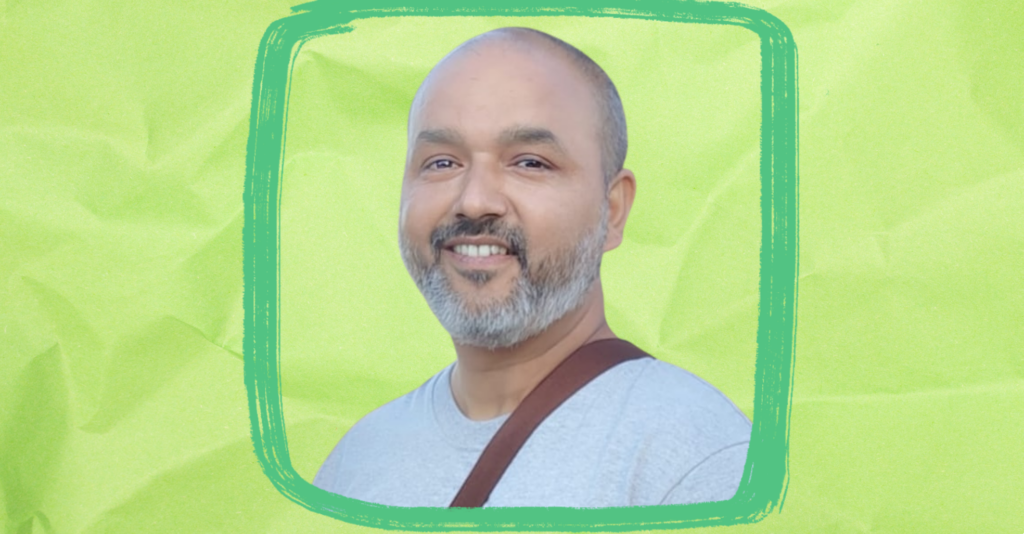
His work primarily focuses on using regional and global seismological observations to investigate the structure and dynamics of the Earth’s interior. His research involves advanced geophysical techniques such as seismic tomography, receiver function analysis, and seismic noise studies to image crust–mantle structures and understand lithosphere-mantle interactions. His research aims in understanding the mantle processes beneath complex tectonic regions, particularly in oceanic environments.
He has been an IASPEI-ECS member since 2025, following his participation in the ECS training school, during the IASPEI–IAGA Joint Scientific Meeting in Lisbon. He is currently associated with ECS working groups supporting outreach activities related to IASPEI-ECS initiatives.
Sanjay’s opinion about ECS Challenges:
He believes that one of the key challenges for ECS is navigating the transition from doctoral training to stable research opportunities, as immediate long-term positions are often limited. Spending extended periods in temporary roles such as postdoctoral fellowships, short-term projects, or contractual appointments, ECSs, often faces uncertainty about career stability while continuously competing for funding, publications, and visibility. Having experienced this phase himself, he notes that prolonged uncertainty can sometimes make researchers reconsider their future in research and can also limit their ability to lead strong collaborations and contribute fully to impactful scientific work.