“True leadership is the art of balancing institutional responsibility with personal passion; managing your time is as vital as managing your research.”
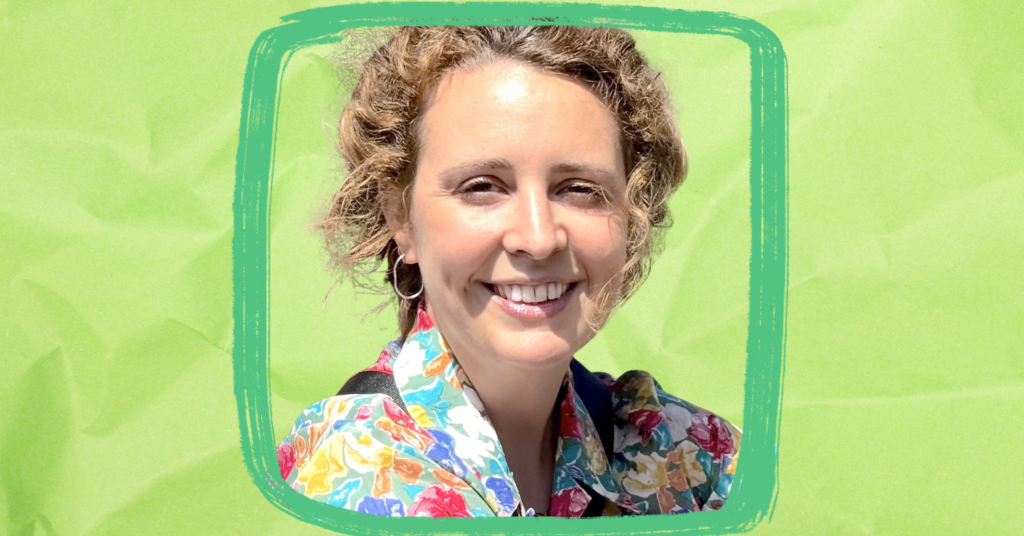
María del Puy Papí-Isaba is a seismologist at GeoSphere Austria, balancing coordinating the seismological service with her doctoral research. She has been part of the IASPEI Early Career Scientist network since 2023, and she still sees herself very much as a learner.
Maria’s career has not followed a purely academic path. It has developed at the intersection of research, operational monitoring, hazard assessment, and scientific advisory work. She did not experience science as something separate from responsibility; for her, both have always grown together. Some days, she is immersed in research on earthquake sources or ground motion equations, reflecting on uncertainties and methodological details, while other days demand rapid assessments, clear communication, and coordinated responses. Moving between these rhythms, slow analytical thinking and immediate action, has shaped how she understands her role as an Early Career Scientist. The work feels deeply meaningful to her because its impact is tangible. But it can also feel demanding. She says: “when you are still officially “early career,” yet contributing to decisions that extend beyond academia, imposter syndrome can quietly emerge, along with the realisation that the more you learn, the more complexity you see”.
Over time, she has come to understand that growth does not happen in perfectly controlled environments. It happens while navigating uncertainty, responsibility, and curiosity simultaneously. It happens in motion.
Maria shares her thoughts on her career and ECS IASPEI community:
Personally, I am driven by curiosity and the need to keep learning. I am constantly seeking new questions, new perspectives, and new ways of understanding seismic processes and their societal implications. Continuous learning is not just part of my career, it is part of how I relate to science. Doing a PhD while working full-time has shaped how I understand academia. Research time is precious, often negotiated between operational responsibilities. Thus, I do not experience academia as a separate sphere; it is woven into daily practice. This has made me realise that there is not a single “correct” trajectory for an Early Career Scientist. Some will follow a traditional academic path. Others will move into operational services, policy advisory roles, interdisciplinary projects, or hybrid positions that connect multiple worlds. These paths are no less scientific, they are simply different.
IASPEI brings together researchers, modellers, observers, operational experts, and communicators. The strength of our community lies precisely in that diversity. As ECS, we are already navigating across these boundaries.
For ECS working across research and operations, visibility can sometimes feel diffuse. Contributions to monitoring systems or advisory processes are essential but not always reflected in publications or metrics. This is why networks like IASPEI ECS are important. They create space for different experiences to be shared. They remind us that uncertainty, interdisciplinarity, and non-linear paths are not weaknesses, they are part of how science evolves. Seismology is changing rapidly, integrating new technologies, computational methods, and interdisciplinary frameworks. ECS are not only adapting to this transformation; we are part of it. To make that sustainable, we need structures that recognise diverse trajectories and foster collaboration across roles and disciplines.
And we need to talk openly about the challenges, not only the achievements.
Maria’s opinion on ECS challenges:
- What is the biggest challenge you face as an ECS?
Balancing long-term scientific development with responsibilities that have immediate societal impact, while still defining my own trajectory within that complexity. - What motivates you to continue in this field?
Curiosity and purpose. The constant opportunity to learn, and the knowledge that our work contributes directly to understanding and preparedness. - What would you like to see improved for ECS within IASPEI?
More visible bridges between commissions, operational communities, and research groups, and clearer ways for ECS to engage across these domains, regardless of whether they aim for a purely academic career or a hybrid one.