
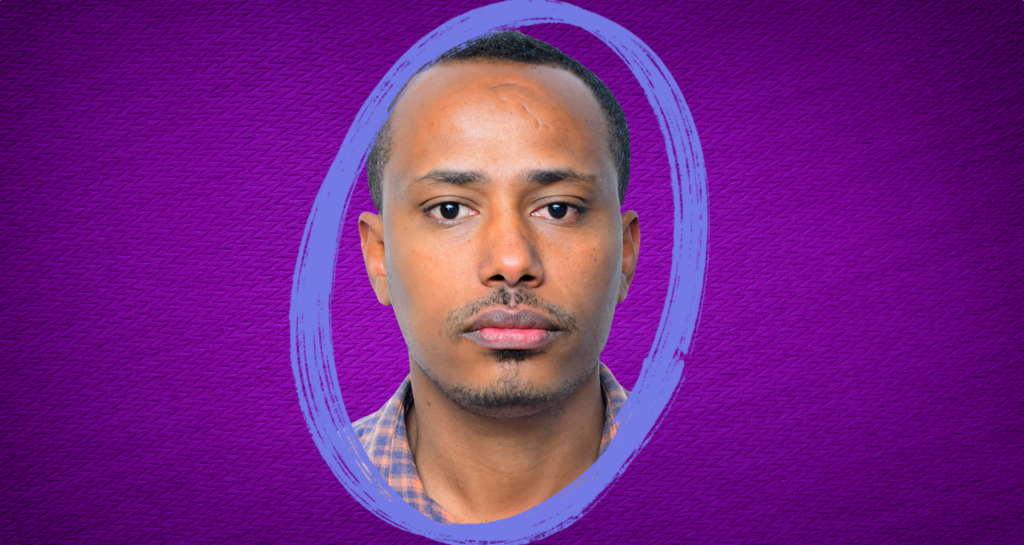
Gemechu Teferi is currently pursuing a PhD in volcanology at the University of Auckland. Before moving to New Zealand, he spent several years in Ethiopia working across both academic and industry settings, which gave him a grounded perspective on what research looks like outside of well-funded Western institutions.
Much of his earlier work focused on the Gedemsa caldera, particularly its stratigraphy and the evolution of its magmatic system over time. In addition, he developed extensive fieldwork experience across several volcanic regions within the Main Ethiopian Rift and the Afar Depression, both part of the broader East African Rift system. According to Gemechu, moving through different volcanic settings and geological contexts became some of the most formative experiences of his career, offering insights that cannot be fully replicated through laboratory work or scientific publications alone. His current research focuses on base surge hazards in the Auckland Volcanic Field, a topic he describes as presenting a very different set of scientific and logistical challenges.
Gemechu’s opinion on ECS challenges:
Having worked in both Ethiopia and New Zealand, Gemechu notes that the contrast between research environments is difficult to ignore. In Ethiopia, he explains, the scientific potential and motivation are clearly present, but researchers often face major obstacles such as limited laboratory access, inconsistent funding, and insufficient structured training opportunities. In New Zealand, these particular limitations are less significant, but they are replaced by different pressures, including intense publication expectations, short-term contracts, and a high risk of burnout.
Reflecting on the broader IUGG early-career scientist community, Gemechu believes that the core needs of ECRs are often similar regardless of geographical context. In his view, researchers need meaningful mentorship, genuine involvement in scientific working groups rather than symbolic participation, and practical training in areas such as grant writing, science communication, and international collaboration. He emphasizes that these needs are equally relevant whether researchers are based in Addis Ababa or Auckland, and that initiatives developed through IUGG and its Associations could play an important role in making these opportunities more accessible worldwide.