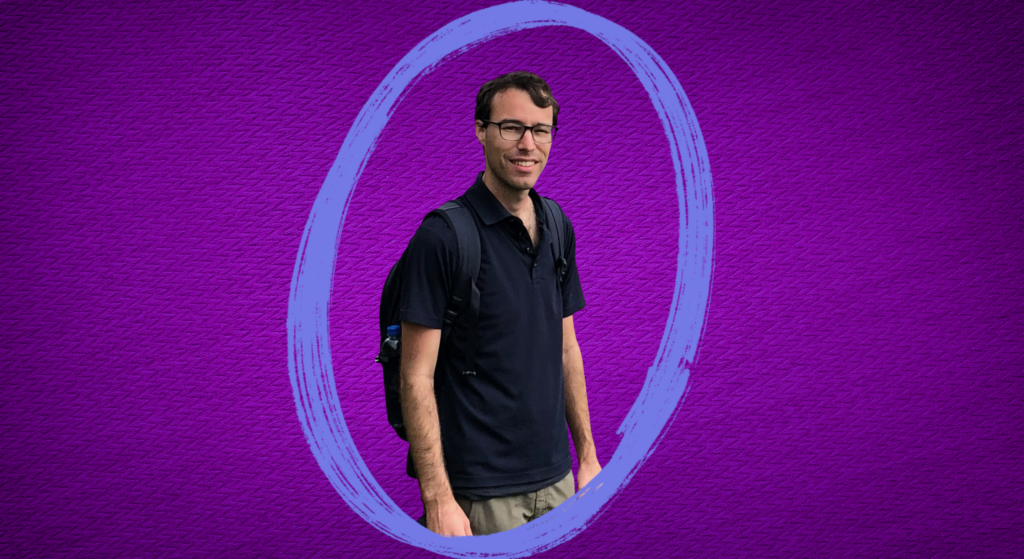
Federico Galetto is currently a researcher at the “Istituto Nazionale di Geofisica e Vulcanologia (INGV)”, Italy. He got his Ph.D. in volcanology at the “Università di Roma Tre” (IT) in 2019 and then he worked as post-doc/researcher both in Italy (2020 and 2025-present) at the INGV, and in the US at Cornell University (2021-2025). His research focuses on using remote sensing data, geodetic modelling and field data to study different aspects of volcanology, such as short-term and long-term deformations in volcanic systems (especially calderas), volcanic eruption forecasting, mechanisms of magma propagation, quantification of the global volcanism, volcano topographic changes. He is member of IAVCEI since 2018.
Federico’s Perspective on the Challenges Faced by Early-Career Scientists and the Role of the IAVCEI ECR Network
The main challenge as an Early Career Researcher (ECR) for Federico is the job precarity. Indeed, the constant research and application for fellowships, research funds and job positions takes a lot of time that could be otherwise dedicated to research, teaching and divulgation. Furthermore, the precarity implies that you often need to work on short-term projects usually that are not connected each other, generating a fragmentation in your research and limiting the possibility to carry on longer-term, and potentially more ambitious, research projects.
The IAVCEI Early-Career Researcher Network (ECR-Net) offered in the past important tools to ECRs, such as the organization of dedicated sessions during the conferences organized by the IAVCEI (fostering collaborations and networking) and some helpful webinars about how to review and write research papers. Federico thinks that these tools might be improved in the future, for examples by increasing the number of soft skills training webinars (e.g. at least 3-4 per years), which should also be focused on those skills that are important for the passage from Ph.D. to post-doc, such as how to write a job or fellowship application (that change significantly from one country to another one), how to build a strong cv for these applications, where to find the list of available fellowships and positions.
Furthermore, Federico believes that platforms such as IUGG could further enhance the visibility of the ECRs’ research by promoting regular (e.g., biweekly) webinars in which ECRs are invited to present their work, through support to its Associations to deliver these initiatives. This would provide valuable opportunities for ECRs to gain visibility and receive important and constructive feedback on their research.