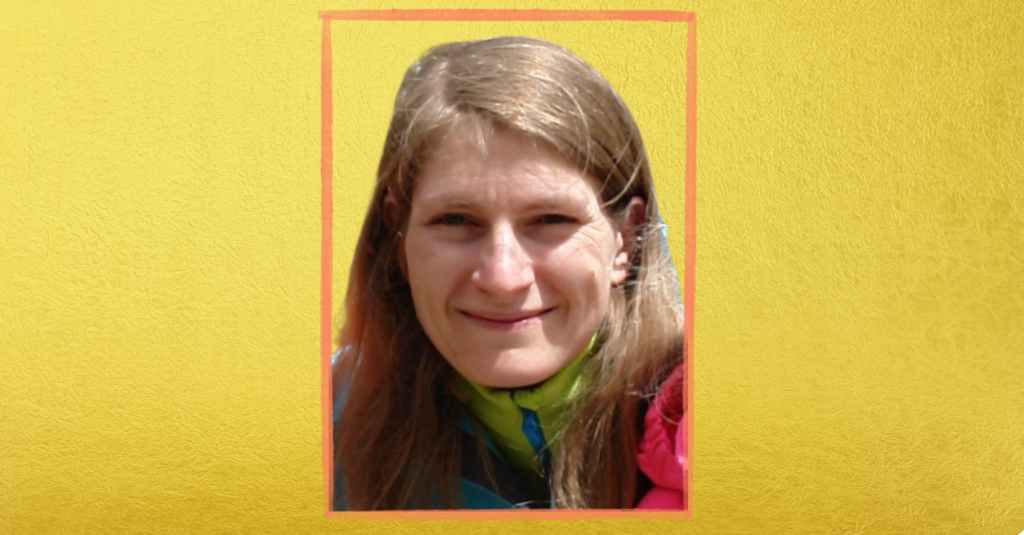
Rebekka Steffen works as a researcher in geodesy at Lantmäteriet (the Swedish mapping, cadastral and land registration authority). She got her Master degree in Germany and her PhD in Canada, both in the field of geophysics. During her Master studies and PhD programme, she had a close connection to geodesy by using gravity data and GNSS observations. This moved her more towards geodesy, despite she is still a geophysicist and developing models to explain changes in the solid Earth related to the melting of ice sheets (glacial isostatic adjustment, GIA). The model outputs (displacement changes, gravity changes, rotational parameters) are an important contribution in various fields of geodesy. She also derives velocity models based on GNSS data that, for example, allow the transition from international to national velocity solutions.
Rebekka was introduced to IAG after attending the IUGG General Assembly in Montreal 2019, where she was asked to lead a new study group on GIA modelling. At about the same time, she started to become an active member of the EGU Geodesy group, first as ECS representative, then as Science Officer. This experience gave her the motivation to put herself forward to become president of IAG Commission 3 (Earth rotation & geodynamics). She was voted into this position for the current term (2023-2027), which also comes with being part of the IAG Executive Committee. There she realised that ECS representation was not existent besides her. But not only this, women were also not well represented. IAG started a taskforce to discuss ideas on how to include a more varied representation of gender, geography and generation in all IAG bodies. A first step was initiated by Rebekka to include ECS representatives in each IAG entity (commission, group, project), which now build the IAG ECS group (and yes, we have to come up with a better name). Besides all this, Rebekka is actively involved in various outreach projects within IAG but also EGU, where she is the editor-in-chief of the EGU Geodesy blog.
Rebekka’s opinion on ECS challenges:
ECS in geodesy today face a number of structural and personal challenges as they try to establish their careers with having a healthy life-work balance in mind. Nowadays, many ECS find their partners in the same field, which can make it particularly difficult to balance building a family while developing a scientific network. Securing two permanent academic positions within the same discipline at the same location(or at least closely connected) is often extremely challenging – sometimes feeling almost like winning the lottery. At the same time, while mobility is generally expected at this career stage, these dual-career situations can actually limit the ability to move freely.
In addition, the limited number of permanent or long-term positions leads to intense competition and a high degree of career uncertainty. Thus, many talented ECS eventually leave academia while looking for more long-term positions in the industry or in governmental agencies. Another common challenge for ECS in geodesy is finding enough opportunities to take on leadership roles, gain visibility, and develop independence. The ongoing involvement of highly experienced senior colleagues is extremely valuable, especially for mentorship and maintaining continuity in the field. At the same time, it can sometimes slow the rotation of roles and delay the handover of responsibilities to the next generation.